Teacher Demonstration
Use the live model as a shared screen demonstration before students try their own predictions and observations.
Launch 304 30 Zhaoyiyan Ptvidmp 4 directly in Tracker Online, or download the TRZ video-analysis package for mechanics.
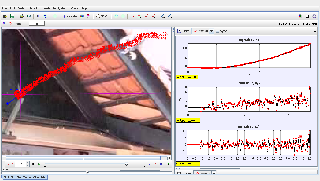
Use the live model as a shared screen demonstration before students try their own predictions and observations.
Open the simulation, adjust the controls, and compare what changes on screen before answering the concept-check questions.
Is the object's motion explained by balanced forces or by a non-zero resultant force?
List the forces acting on the object before changing a control.
Use the expected resultant force to predict the motion change.
Observe velocity or acceleration evidence and compare it with the prediction.
Explain how changing force or mass changes acceleration.
Use this as a force-to-motion lesson rather than a vocabulary exercise.
Ask: Can an object move with zero resultant force? What changes when resultant force is non-zero?
Insist on a force diagram before a motion claim.
These questions are generated from the topic and the concept illustrated by the simulation. Use them after students have explored the model.
Correct first attempts build a streak and unlock higher point multipliers on this device.
1. What does a non-zero resultant force cause?
2. If forces are balanced, what is the acceleration?
3. Which relationship summarises Newton's second law?
4. For the same resultant force, what happens when mass is increased?
5. What is a good evidence-based response?
Unlocks after 3 correct concept-check answers on this page.
1. A passenger walks forward inside a bus moving forward. What must be stated before giving the passenger's velocity?
2. Rain falls vertically in the ground frame, but appears slanted to a moving runner. Why?
3. Two observers give different velocities for the same object. What is the best expert response?
4. In uniform motion, what evidence shows constant velocity rather than merely motion?
5. What common mistake occurs in airplane-release or moving-platform problems?
Anonymous activity shows this resource is being discovered, revisited, and used by learners in different places.
Country or region is inferred anonymously from server location headers when available. No names, accounts, or IP addresses are shown.