Teacher Demonstration
Use the live model as a shared screen demonstration before students try their own predictions and observations.
Explore Vertical Reflection Model With Point Object, Wink, Bear, Large Object And Ability To Wr... as an interactive EJS simulation for waves and optics.
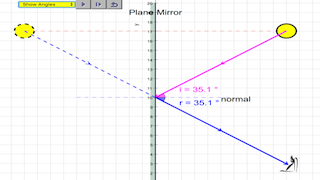
Use the live model as a shared screen demonstration before students try their own predictions and observations.
Open the simulation, adjust the controls, and compare what changes on screen before answering the concept-check questions.
What is being measured, how is it read, and how reliable is the result?
Decide whether the model is about length, time, mass, vector quantity, or data.
Read the scale, graph, or numerical display carefully.
State the measurement with suitable unit and precision.
Discuss uncertainty, repeat readings, or possible errors.
Use this resource to strengthen measurement habits: read carefully, record with units, and explain reliability.
Ask: What instrument or display gives the evidence? What is the smallest meaningful reading? What could cause error?
Ask students to give the reading and a short uncertainty comment. This makes measurement more than just writing a number.
These questions are generated from the topic and the concept illustrated by the simulation. Use them after students have explored the model.
Correct first attempts build a streak and unlock higher point multipliers on this device.
1. What should come with a measured value?
2. Why choose a suitable instrument?
3. What does uncertainty remind us?
4. Why repeat a measurement?
5. What is a good measurement explanation?
Unlocks after 3 correct concept-check answers on this page.
1. In a plane-mirror interactive, what should students compare for object and image?
2. What feedback fits 'the mirror reverses up and down'?
3. How should students use ray diagrams in a mirror model?
4. In a periscope model, what should students explain?
5. What makes a mirror conclusion expert-level?
Anonymous activity shows this resource is being discovered, revisited, and used by learners in different places.
Country or region is inferred anonymously from server location headers when available. No names, accounts, or IP addresses are shown.