Enhance teaching and learning
Simulations, online labs, phone sensors, and digital manipulatives make concepts observable and discussable.
OSPSG Awards
These awards tell a consistent story: Singapore teachers and partners have built open simulations, mobile experiments, online laboratories, AI-enabled manipulatives, and SLS workflows that make learning more visible, more customisable, and more scalable.
MOE's EdTech Masterplan 2030 frames the vision as technology-transformed learning for a technology-transformed world. These award stories show that vision already taking shape through classroom-tested tools, teacher capability, and student-centred learning designs.
Simulations, online labs, phone sensors, and digital manipulatives make concepts observable and discussable.
Open resources, RPA, and SLS workflows help teachers create, adapt, and manage digital learning more efficiently.
Inquiry tasks, AI-supported learning, and data-rich experiments develop agency, digital literacy, and technological confidence.

2025 | Gold Innergy Submission
The 2025 Gold Innergy story shows how generative AI can move from novelty to classroom infrastructure: teachers create manipulatives faster, students interact with concepts more directly, and SLS becomes a launchpad for richer learning evidence.

2024 | Silver Innergy Award
This award highlights a powerful design principle: high-ability learners need tasks that invite conjecture, testing, explanation, and refinement. Localised digital resources make that kind of mathematical thinking more accessible to Singapore classrooms.
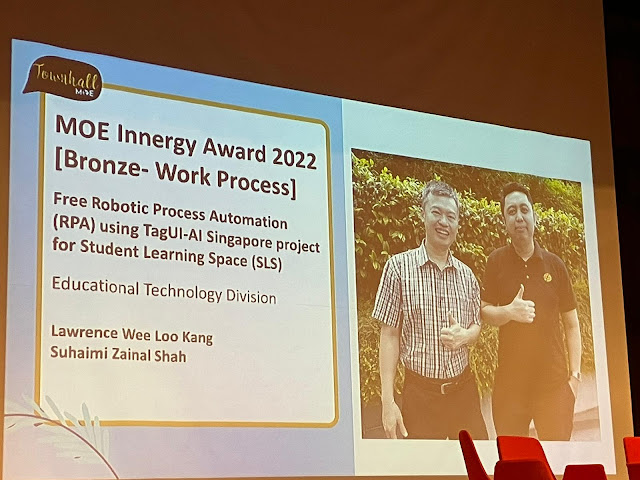
2022 | Bronze Innergy Award
The RPA award matters because educational technology is not only about student-facing apps. Sometimes the biggest improvement is giving teachers back time by automating repetitive platform tasks safely and transparently.

2022 | National Day Awards
The 25-year Long Service Medal is a reminder that meaningful educational technology is sustained by people, not just platforms. The continuity behind Open Source Physics at Singapore is part of why its resources keep improving.

2022 | UNESCO Publication
The UNESCO publication extends the earlier prize story by placing the work among international examples of technology used meaningfully for education. It is evidence that open interactive resources can travel beyond one school system.
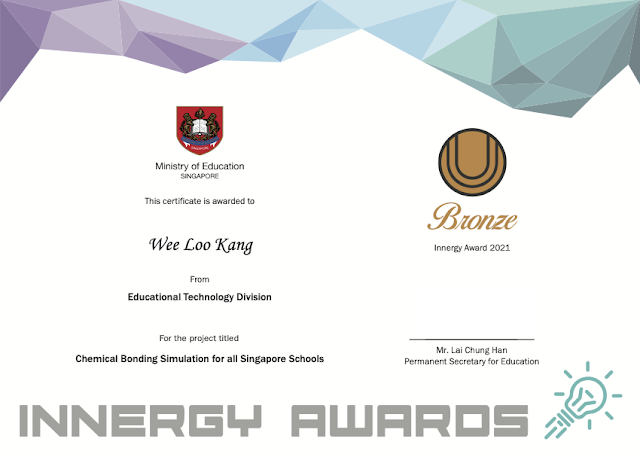
2021 | Innergy Bronze School Award
This Bronze School Award highlights the importance of partnership. When school teams and ETD expertise work together, digital lessons become more grounded, more scalable, and more responsive to classroom realities.
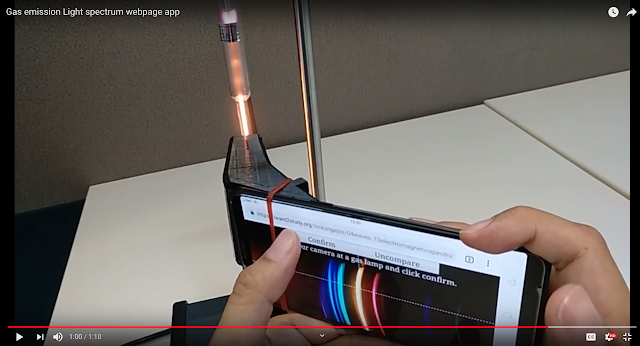
2021 | GOLC International Online Laboratory Award
The GOLC recognition celebrates a core strength of Open Source Physics at Singapore: online labs are not replacements for thinking. They are environments where learners can manipulate, observe, compare, and explain phenomena with visual clarity.
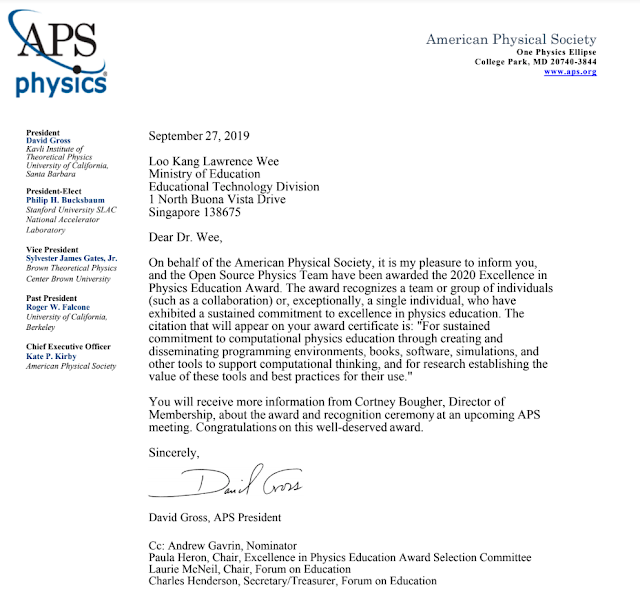
2020 | Excellence in Physics Education Award
The American Physical Society recognition points to something larger than one app or one lesson. It affirms a community practice: build tools openly, test them with teachers, improve them with evidence, and share them back with the world.
2020 | Journal Recommendation
Being recommended as one of the top websites for virtual labs during COVID-19 shows the resilience of open online laboratory resources. When physical access was constrained, learners still needed meaningful ways to investigate phenomena.

2020 | Innergy Commendation Award
The wave simulator demonstration kit connects physical modelling, visualisation, and teacher reasoning. It shows that strong EdTech does not always mean screen-only learning; the best designs often link concrete apparatus with digital explanation.
2019 | Bronze Innergy Award
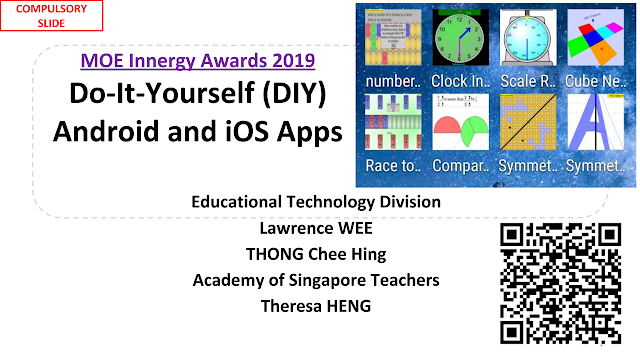
The DIY mobile app award recognises a practical shift: teachers do not only consume educational apps, they can learn to package and share their own. That turns app creation into a teacher capability rather than a vendor dependency.

2019 | Gold Innergy Award
This award captures a beautifully simple idea: students already carry powerful sensors. When those sensors become part of a physics investigation, learning becomes personal, measurable, and memorable.
2018 | National Day Awards
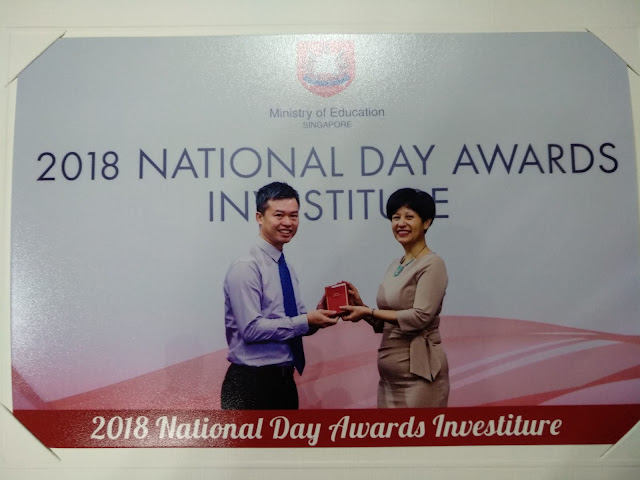
The National Day Awards Commendation Medal recognises public service contribution. In the context of OSPSG, it sits beside the technical awards as evidence that sustained educational innovation is also a form of service.
2017 | MOE Gold Innergy Award
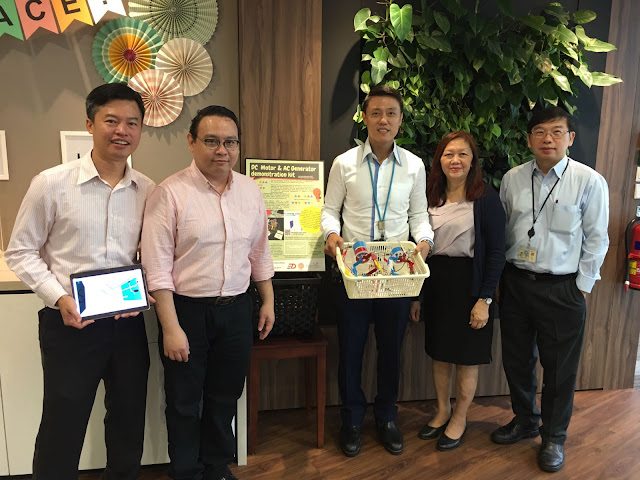
The DC motor demonstration kit award shows the strength of combining apparatus, representation, and explanation. The CoRe approach keeps the physics idea at the centre while technology and demonstration design make it easier to reason about.
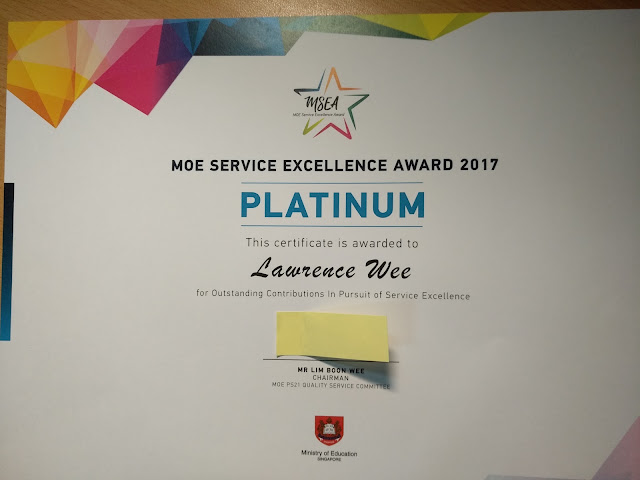
2017 | MOE Service Excellence Award
The MOE Service Excellence Award highlights the relational side of educational technology. For tools to be adopted, teachers need support, responsiveness, and confidence that help is available when classroom needs become specific.
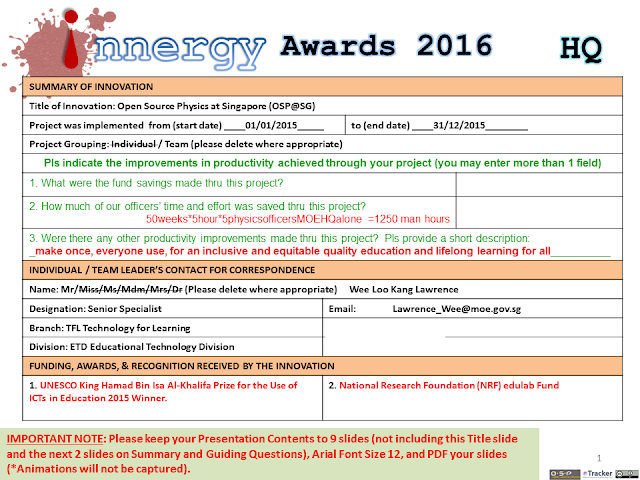
2016 | MOE Gold Innergy Award
The 2016 MOE Gold Innergy Award marks a turning point: Open Source Physics at Singapore was recognised not just as a collection of simulations, but as a sustainable way for teachers to design, share, and improve technology-enabled lessons.

2015-2016 | UNESCO King Hamad Bin Isa Al-Khalifa Prize
The UNESCO prize situates this work on a global stage. It recognises the educational value of open, interactive, ICT-enabled resources that can travel across classrooms, countries, and learning contexts.

2014 | Public Service 21 Distinguished Star Service Award
This Public Service 21 recognition points to a core pattern in the awards archive: innovation is strongest when it remains service-oriented. The tools matter because they help teachers teach and students understand.

2013 | MOE Outstanding Innovator Award
The MOE Outstanding Innovator Award recognises the early momentum behind Open Source Physics at Singapore. It marks the idea that teachers can be designers of digital learning environments, not only users of them.

2012 | Public Service 21 ExCEL Awards
The Best Ideator award recognises a habit that runs through the whole archive: notice a classroom problem, imagine a better tool, prototype quickly, and share the improvement. That habit is the root of the later OSPSG ecosystem.
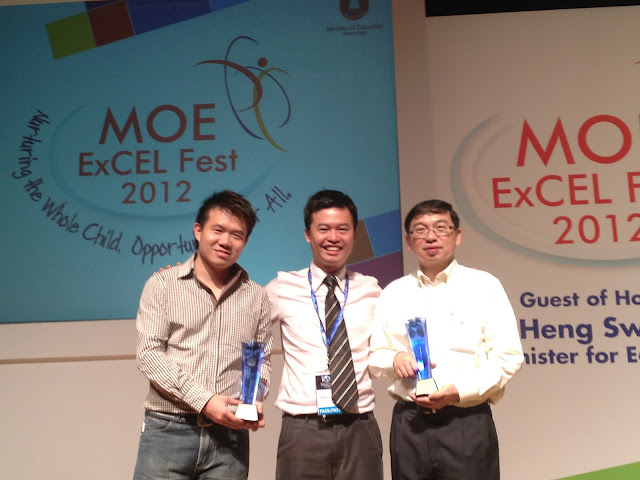
2012 | Gold Innergy Award
The 2012 Gravity Physics by Inquiry award captures the early power of simulation-based inquiry. It invited students to use models to ask questions that would otherwise be impossible to investigate directly in school.

2012 | MOE Service Excellence Award
This service excellence award recognises the support work around innovation. Teachers adopt digital tools more readily when the surrounding service is responsive, practical, and grounded in classroom constraints.