arXiv:1204.4964
One-dimensional collision carts computer model and its design ideas for productive experiential learning
One-dimensional collision carts model
EJSCollisionsMomentum
Research Digest
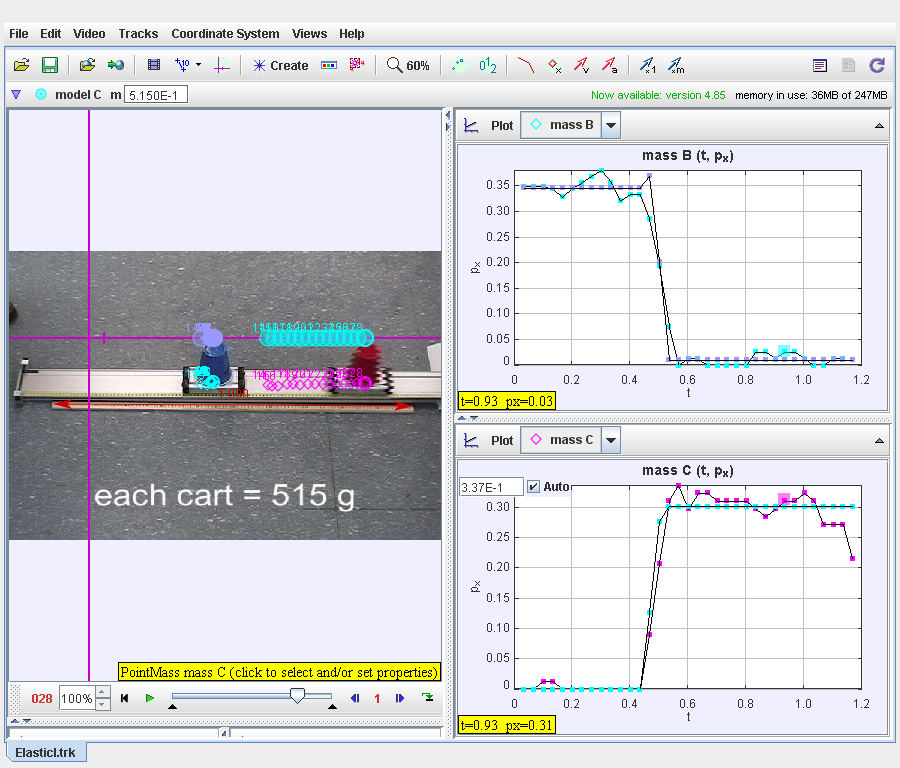
The paper uses a collision cart model to support experiential learning of momentum and collisions. It is valuable because students can vary masses and velocities, then compare before-and-after quantities.
Use It Tomorrow
Ask students to predict the outcome of elastic and inelastic collisions before running the model. Then compare total momentum and kinetic energy.
Pedagogical Move
Use conservation checks as the sense-making tool: what stayed the same, what changed, and why?
Student Agency
Frame the task so students work like young scientists: they choose or justify the variable to test, make a prediction, collect evidence, defend a claim, and decide how to improve the model or investigation.
Discussion Prompts
- What evidence does the model, video, or activity make visible?
- Which variable should students change first, and what should they keep constant?
- What claim can students make from the evidence, and what limitation should they acknowledge?
Reveal suggested answers
- Evidence: The model makes the before-and-after velocities, masses, momentum totals, and energy changes visible so students can compare the system quantitatively.
- Variable: Change one cart mass or one initial velocity first; keep the other mass, track, collision type, and starting conditions fixed.
- Claim: Students can claim that total momentum is conserved for the cart system when external forces are negligible, while kinetic energy may change depending on the collision model.