arXiv:1207.0220
Video Analysis and Modeling Tool for Physics Education: A workshop for Redesigning Pedagogy
Tracker workshop for redesigning pedagogy
TrackerWorkshopPedagogy
Research Digest
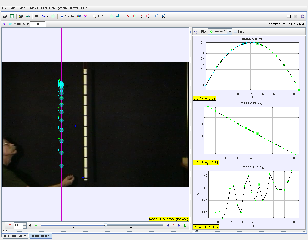
The paper is workshop-oriented: it shows how video analysis can change the pedagogy of motion lessons. The teacher move is to give students authentic data and let them construct meaning from it.
Use It Tomorrow
Use a simple motion clip first, then move to student-collected videos. Build confidence in tracking, graph reading, and model comparison.
Pedagogical Move
Debrief the method: where did the data come from, what assumptions were made, and how reliable is the fit?
Student Agency
Frame the task so students work like young scientists: they choose or justify the variable to test, make a prediction, collect evidence, defend a claim, and decide how to improve the model or investigation.
Discussion Prompts
- What evidence does the model, video, or activity make visible?
- Which variable should students change first, and what should they keep constant?
- What claim can students make from the evidence, and what limitation should they acknowledge?
Reveal suggested answers
- Evidence: Video analysis makes authentic motion data, plotted coordinates, curve fits, and modelling assumptions visible during a lesson.
- Variable: Change the selected video segment or model fit first; keep the scale calibration, frame rate, tracked object, and coordinate axes fixed.
- Claim: Students can claim that measured motion can be described by a model, while acknowledging uncertainty from calibration, tracking choices, and simplifying assumptions.