I want this DevDay submission to show something real: not a demo that disappears after a weekend, but a living public site used to organise open educational resources for teachers and students.
Process Video
From open simulations to a playable learning catalogue
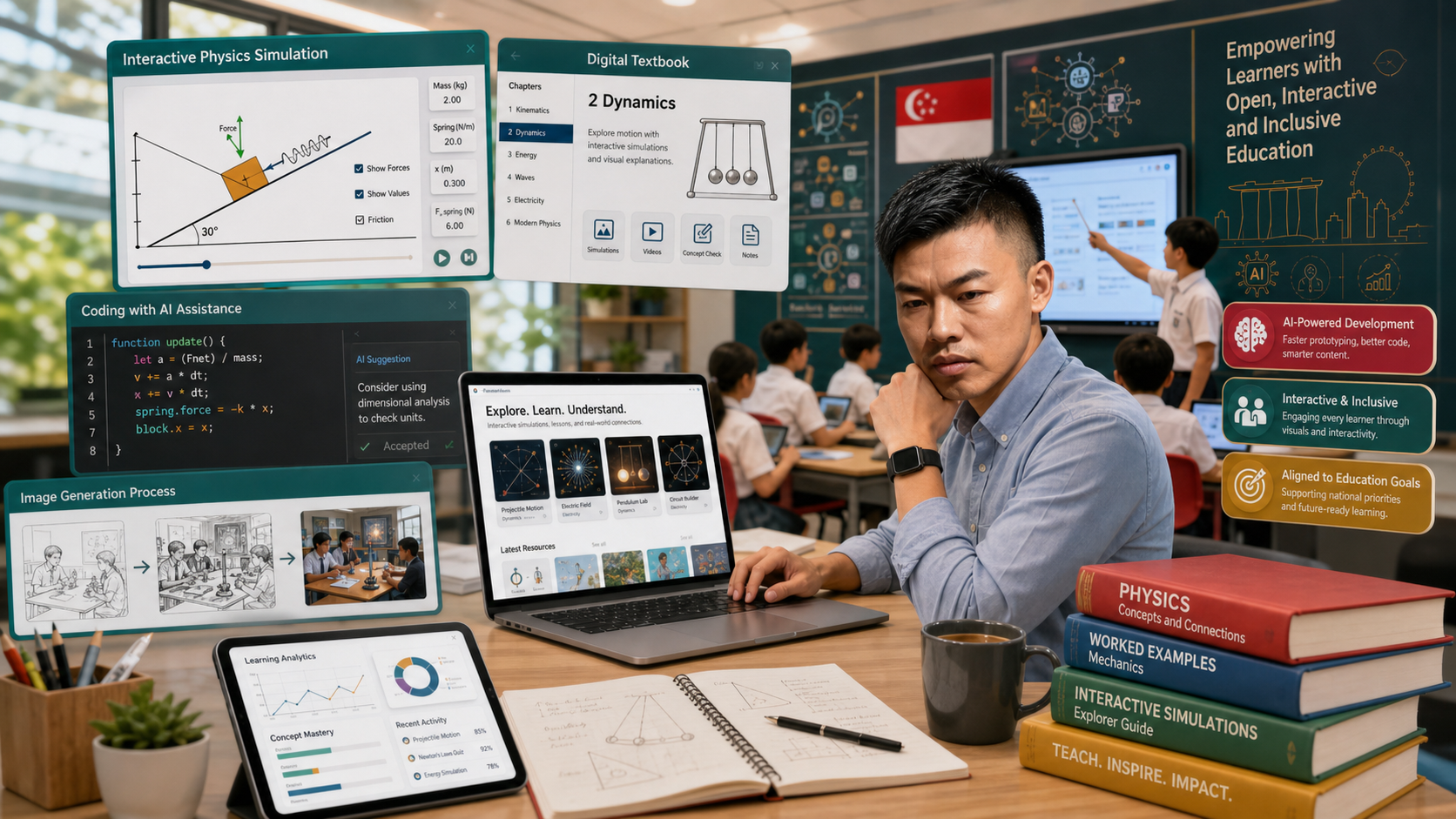
Watch the short build story for the #OpenAIDevDay2026 submission: AI-assisted coding, Image Gen storyboarding, interactive physics resources, and a teacher-ready publishing workflow.
Watch on YouTube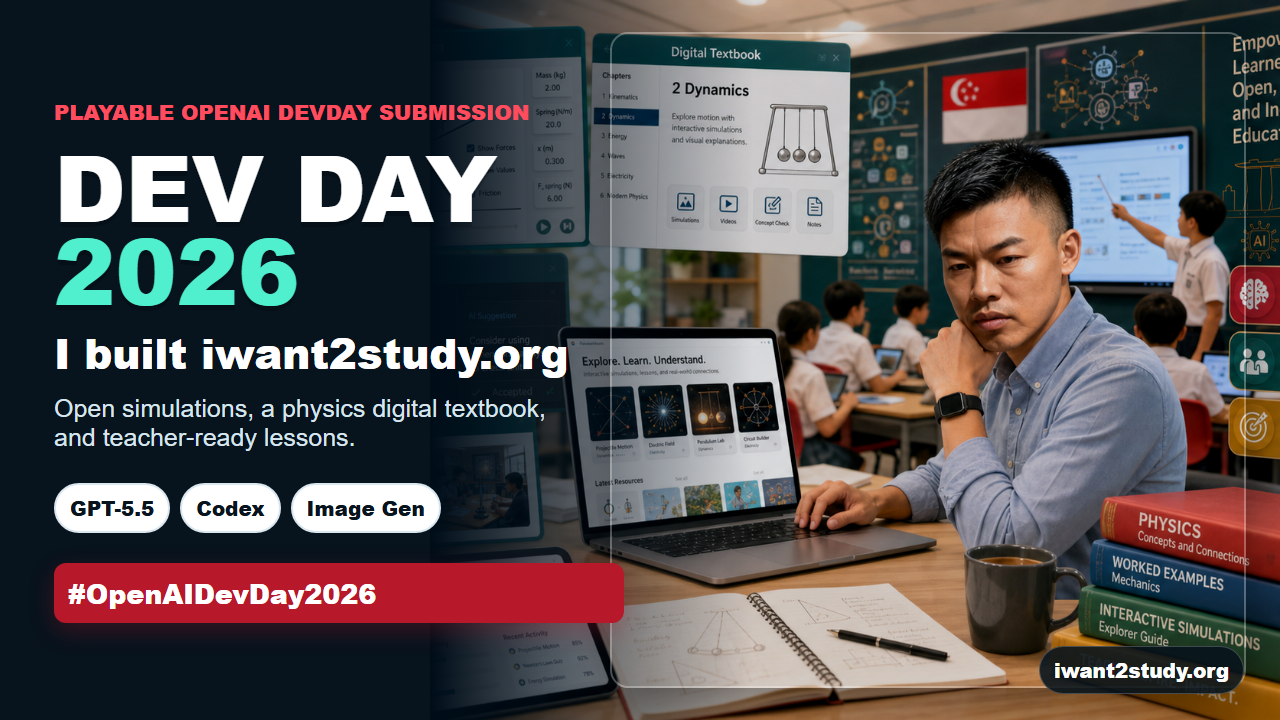 YouTube process video
What Was Built
The playable link is iwant2study.org. It brings together a searchable simulation catalogue, curated research digests, award impact stories, and a physics digital textbook that turns separate simulations into chapter-based learning pathways.
The work is especially strong because it is practical. A teacher can search for a topic, open an interactive simulation, move into a textbook chapter, or share a generated resource page with students.
1. Catalogue
Resource metadata, thumbnails, tags, launch links, and related articles are surfaced through a fast searchable homepage.
2. Textbook
Physics resources are grouped into chapters, with local progress, concept checks, and pathways for students who need more support.
3. Lesson Pages
Individual simulations get teacher-friendly pages with investigations, prompts, and direct links to the original interactives.
4. Publishing
Selected-file deployment keeps the public site current without republishing the entire archive each time.
How AI Helped
Codex-style coding assistance helped read the existing site patterns, add catalogue entries, generate pages, test links, and deploy only the files that changed. The important part was not replacing teacher design, but speeding up the work that usually blocks teacher-led publishing.
Image Gen helped frame the visual story: classroom, code, simulations, and students learning from manipulable evidence rather than static screenshots. That concept became the poster direction and video storyboard.
Playable Examples
- Main catalogue - search and browse thousands of learning interactives.
- Physics digital textbook - chapter-based interactive learning paths.
- Drone Hover Challenge - Newton's First Law through thrust, weight, and motion evidence.
- Elevator Phone Accelerometer - normal force, apparent weight, xAPI, and phone-sensor learning.
Ready-to-post DevDay reply
#OpenAIDevDay2026
Playable link: https://iwant2study.org/
Build story and process video: https://iwant2study.org/blog/openai-devday-2026-iwant2study/
YouTube video: https://youtu.be/63G36bdyodA

I built a public OER learning catalogue and physics digital textbook with GPT-5.5/Codex-style coding workflows and Image Gen storyboarding. The process converted thousands of simulations into searchable learning paths, generated resource pages, and deployable teacher-ready lessons.
Why It Matters
A large archive of learning tools is only useful when teachers and students can find, trust, and use it quickly. The build process turns open simulations into a more discoverable, teachable, and sustainable learning system.
The prize would be meaningful because DevDay is exactly where this kind of work belongs: AI as a multiplier for useful educational technology, not just a shortcut for producing more content.